
Medically reviewed by Dr. Naveed A. Shaikh, Diabetologist & Nutrition Coach — 26 August 2026
Lavender is one of the easiest essential oils to bring into daily life. It smells clean and familiar, takes only a few drops at a time, and fits naturally into things you already do — winding down, massage, travel and personal care. Yet many people buy a small bottle, use it once or twice, and then leave it sitting in a drawer. Part of the problem is the advice surrounding it. Online, lavender is sometimes presented as a cure for everything from insomnia to hair loss. Meanwhile the things that actually matter — dilution, dispersal, storage and sensible expectations — are often skipped entirely. Lavender does not need exaggerated claims to earn a place on your shelf. Here are seven practical ways touse it properly, along with an honest look at what the evidence does and does not support.
Not every "Lavender Oil" is the same
Lavender is a broad name covering several different plants. Lavandula angustifolia — often called true or English lavender — is the species most commonly associated with relaxation and bedtime aromatherapy. Spike lavender and lavandin generally contain more camphor and 1,8-cineole, giving them a sharper, more camphoraceous character. They are useful oils in their own right, but their chemistry and aroma are not identical to true lavender. So check the botanical name on the label, not just the word “lavender” on the front.
One drop of lavender before bed does more for sleep than an hour of scrolling ever will. Small rituals, repeated daily, are what actually change how you feel.
Purity Peak Naturals
Build it into your bedtime routine
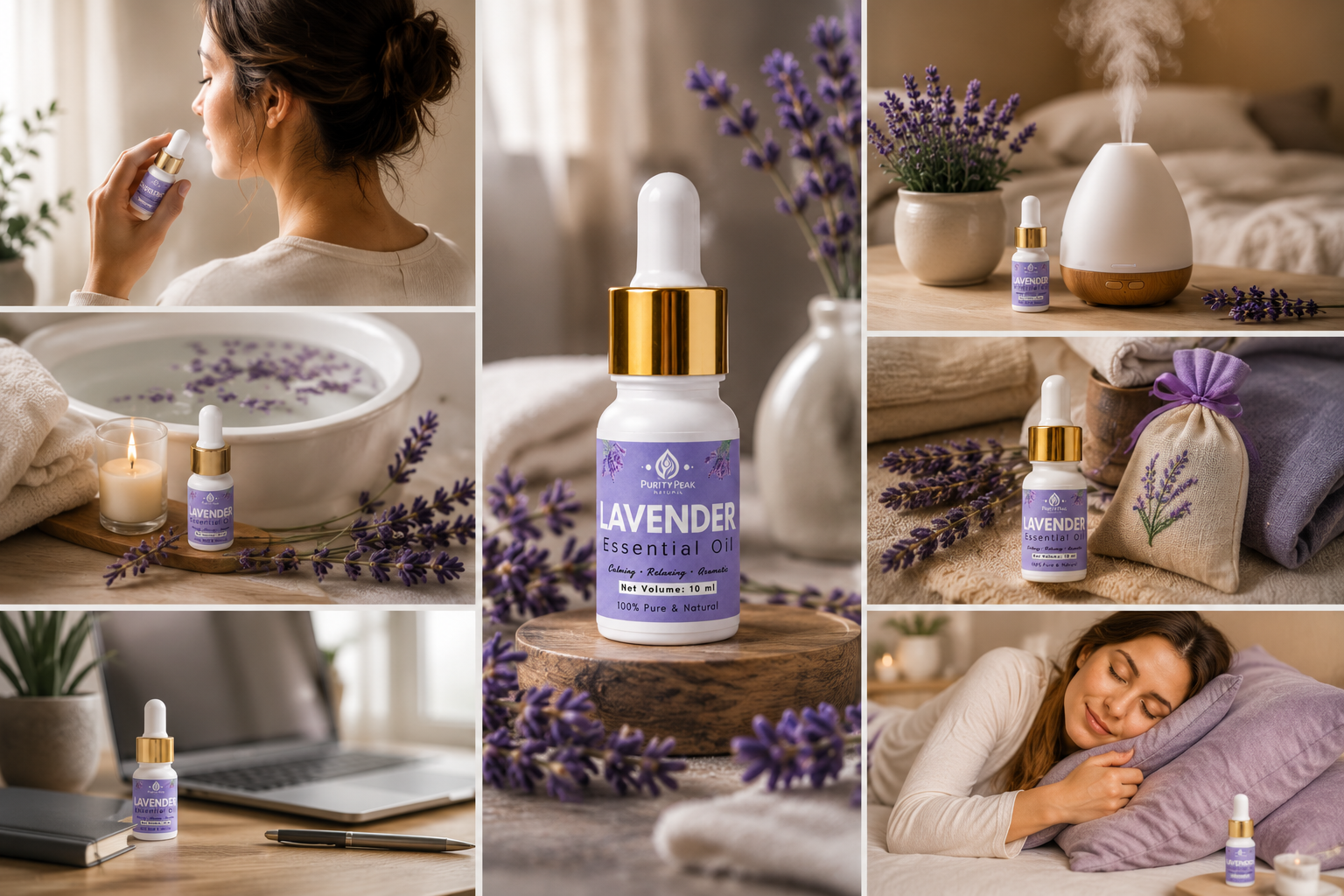
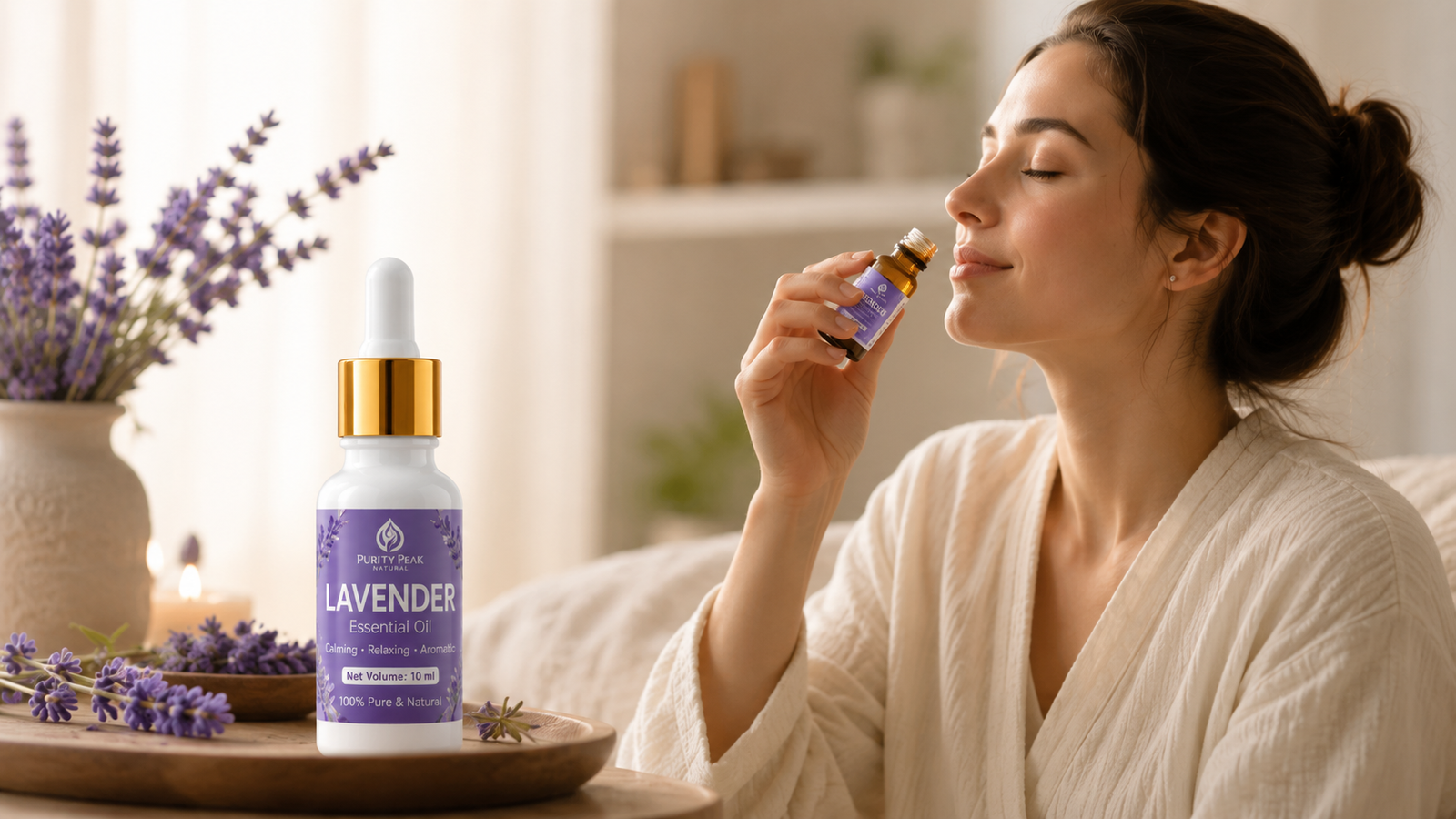
Lavender’s best-known use is also one of the easiest to make consistent. Add a few drops to a suitable essential-oil diffuser and run it while you get ready forbed, or place one or two drops on a tissue and keep it on your bedside table. There is no need to apply neat essential oil directly to your pillow or skin.
Does lavender actually improve sleep?
The evidence is promising, but not definitive. Some studies and reviews suggest that lavender aromatherapy may improve perceived sleep quality, particularly in people who are already sleeping poorly. However, many of these studies are relatively small, and aromatherapy is difficult to blind, because participants can usually tell whether lavender is being used. Think of lavender as a relaxing addition to healthy sleep habits rather than a treatment for insomnia. It works best alongside the basics:
- Dim the lights before bed Reduce late-night screen exposure.
- Avoid caffeine late in the day.
- Keep a reasonably consistent bedtime.
- Lavender works better as part of a routine than as a substitute for one.
Make a one-minute reset for stressful days
Put one drop on a tissue, hold it a comfortable distance from your face, and take a few slow breaths. You might use this before a difficult meeting, an examination, the commute home, meditation or prayer, or simply while winding down after a long day. With repetition, the familiar scent becomes part of a learned cue to slow down. That is a more measured explanation than claiming lavender is balancing your stress hormones or treating anxiety — and a pleasant sensory ritual can still be useful without turning it into a medical claim.
Add it to an evening massage
Lavender works well when properly diluted into a carrier oil for a gentle neck, shoulder, foot or body massage.
Simple adult dilution
Add 2 to 3 drops of lavender essential oil per 10ml of carrier oil. Sweet almond, jojoba and fractionated coconut oil are all suitable. Massage gently rather than aggressively. The benefit comes from the combination of touch, warmth, relaxation and a few unhurried minutes — not from the lavender alone.If pain is persistent or severe, or comes with swelling, weakness, numbness or a recent injury, it deserves proper medical assessment rather than firmer massage.
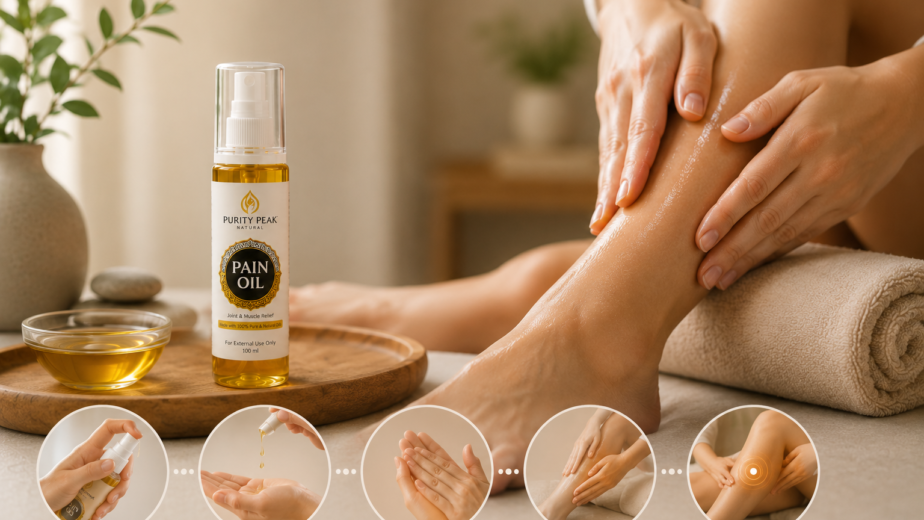
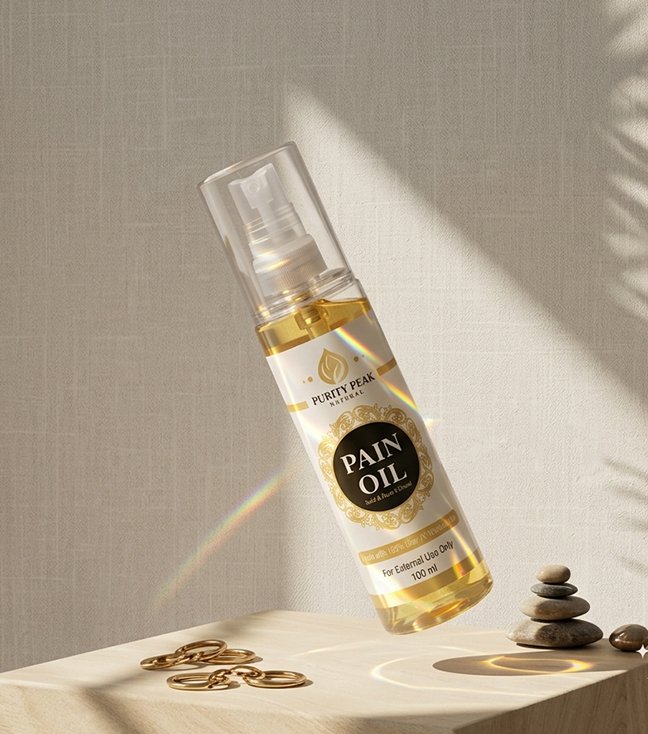
For dedicated muscle and joint massage, use our Natural Pain Relief Oil according to its own directions.
Turn a bath into a lavender ritual — safely
This is one of the places where essential-oil advice most often goes wrong. Never drop essential oil straight into bathwater. Essential oils do not dissolve in water. Concentrated droplets remain on the surface and come into direct contact with the skin, increasing the risk of irritation.
Do it this way instead
Mix 4 to 5 drops into a bath base specifically designed to accept essential oils, following the manufacturer’s instructions, then add it to the running water. Proper dispersants such as Solubol or Polysorbate 20 can also be used according to their directions. Some foaming bath products may disperse essential oils, but an ordinary household soap or shampoo is not automatically suitable simply because it containssurfactants — it was not necessarily formulated to accept an additional dose of concentrated oil. Carrier oil is different from a dispersant. It dilutes lavender but does not make it dissolve in water, and it can make the bath slippery. Epsom salts and milk are not reliable dispersants either. The goal is not to use more lavender. It is to use a small amount correctly.
Use it in a pre-wash scalp ritual
Mix 2 to 3 drops of lavender essential oil into one tablespoon of almond, jojoba or coconut oil. Massage a small amount gently into the scalp for a few minutes, then wash your hair as usual.
Will lavender make your hair grow?
We would not promise that. Many online claims about lavender and hair growth rely heavily on animal research, and the human evidence is not strong enough to recommend lavender essential oil as a treatment for hair loss. Hair thinning can have many causes — genetics, iron deficiency, thyroid disorders, hormonal changes, nutritional problems, illness and certain medications among them. None of these should be expected toimprove because a few drops of essential oil were applied to the scalp. Use lavender because you enjoy the scalp massage and the aroma, not because someone has promised dramatic regrowth.
Add it to a diluted body oil
Roughly 3 drops per tablespoon of carrier oil gives about a 1% dilution, which makes a pleasant body oil for healthy, intact skin. Sweet almond and jojoba both work well. One principle matters here: natural does not mean allergy-proof. Lavender contains fragrance compounds including linalool, which can cause allergic contact dermatitis in some people. As linalool is exposed to air over time, it oxidises into compounds more likely to trigger sensitisation.
For safer use:
- Dilute essential oils before routine skin application
- Patch-test any new preparation
- Stop using it if you develop itching, burning, redness or a rash Avoid broken, infected or actively inflamed skin
- Lavender may be part of personal care. It is not a treatment for eczema, burns, wounds or skin infections.
Keep it in your travel bag
Travel disrupts familiar routines. New beds, hotel rooms, overnight journeys and long flights can all make it harder to settle down — and a 10ml bottle takes up almost no space. Rather than applying lavender directly to hotel bedding, put one drop on your own tissue or handkerchief and keep it nearby. Using the same familiar scent you associate with your evening routine provides a small piece of consistency in an unfamiliar environment. Sometimes the most useful wellness habits are not complicated. They are simply the ones you repeat.
A note on homemade room and linen sprays
You will find countless DIY recipes combining water, lavender essential oil, and either vodka or witch hazel. We do not generally recommend these mixtures. Ordinary household vodka and witch hazel do not reliably solubilise essential oils at the concentrationsused in most online recipes, so the mixture separates. Water-based preparations without an appropriate preservation system can also support microbial growth during storage. A professionally formulated spray requires appropriate solubilisation and, where necessary, proper preservation. For everyday home use, a diffuser, a tissue or a fabric sachet is simpler and more reliable.
Lavender essential oil safety: the rules that matter
Essential oils are highly concentrated botanical products. A few basic precautions make their use considerably safer.
- Dilute before skin contact
Even relatively gentle essential oils can cause irritation or sensitisation when used undiluted. Dilution reduces unnecessary exposure and lowers the risk of a reaction.
- Keep it away from the eyes
If essential oil accidentally gets into an eye, remove contact lenses and immediately rinse with plenty of clean, room-temperature water for at least 15 to 20minutes. Seek medical attention if significant pain, persistent redness, blurred vision or other visual disturbance occurs. Do not delay rinsing while looking for another substance to flush the eye with.
- Do not ingest it
Purity Peak Lavender Essential Oil is intended for aromatherapy and properly diluted external use. Some specially formulated oral lavender preparations have been studied clinically, but that does not make an ordinary bottle of essential oil an oral supplement. Always follow the directions on the product label.
- Keep it away from children
Store essential oils securely, where children cannot reach, spill or accidentally drink them.
- Take care around pets
Concentrated essential oils can harm animals if swallowed, spilled onto their coat or applied directly to their skin. If you use a diffuser, run it for a limited period, keep the bottle where pets cannot knock it over, keep the room reasonably ventilated, and allow animals to move away from the scent. Pets with respiratory disease may require extra caution. Birds are particularly sensitive to airbornesubstances, so essential-oil diffusion around them is best avoided.
- Store lavender properly
Keep the bottle tightly closed, away from direct sunlight and excessive heat, in its original dark glass container. Oxidation can change fragrance compounds such as linalool into substances more likely to trigger allergic contact dermatitis. Follow the shelf life stated on the product, and discard any oil that has noticeably changed in smell or character.
- Pregnancy, breastfeeding and regular medication
Reliable safety information about regular lavender essential-oil use during pregnancy and breastfeeding is limited, and lavender may have theoretical interactions with sedating medicines. If you are pregnant, breastfeeding, taking regular medication or managing a significant medical condition, ask your healthcare professional before regular essential-oil use.
How much lavender do you actually need?
Not much. A 10ml bottle lasts surprisingly long when you are using only two or three drops at a time. More drops do not automatically mean more benefit — they mean more exposure, and potentially more irritation. That reflects the Purity Peak approach: good ingredients, used intelligently, in the amounts they were meant for.
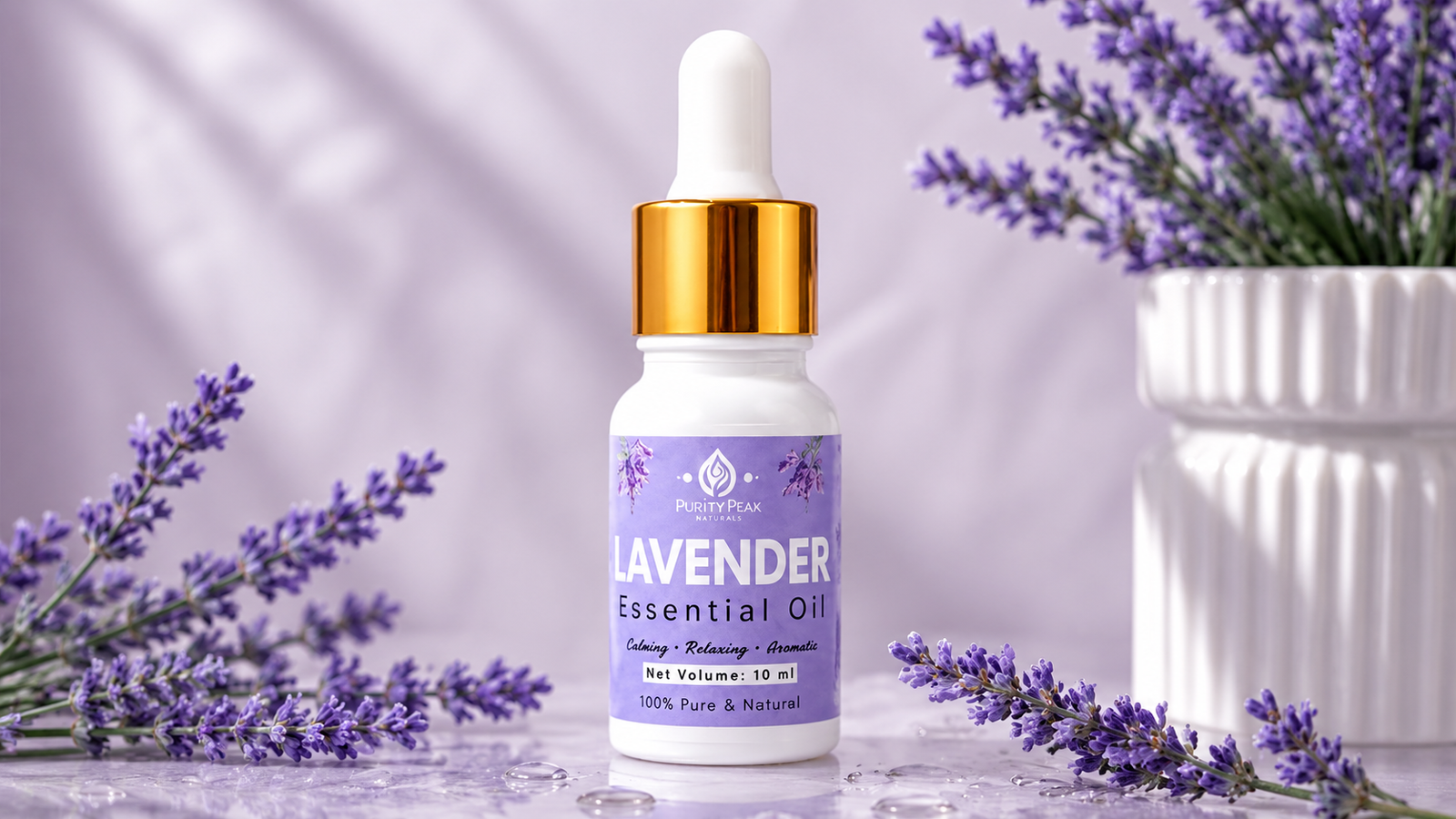
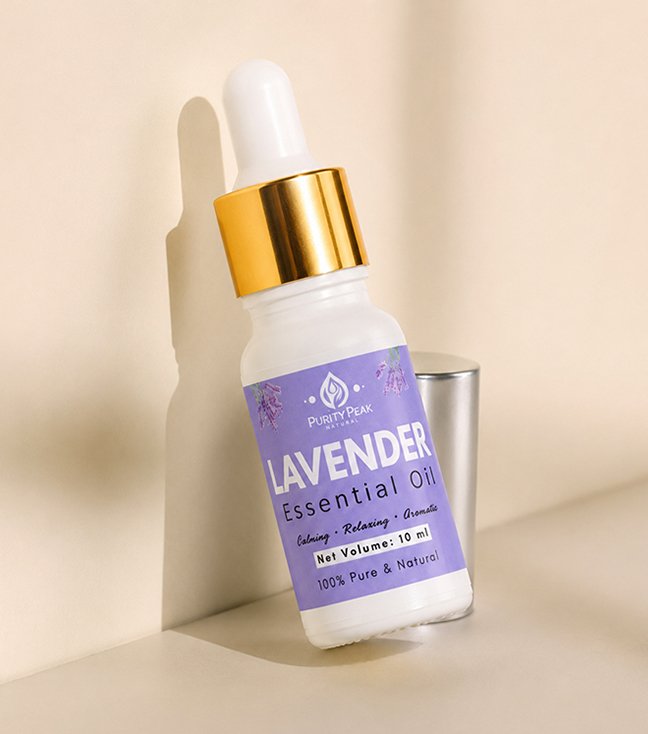
Purity Peak Lavender Essential Oil — 10ml
Lavender can be a simple addition to bedtime, massage, scalp care, travel and everyday relaxation. It does not need to be marketed as a cure for insomnia, anxiety, hair loss, pain or skin disease to be worth having. Used thoughtfully, a small bottle becomes one of the easiest botanical products to keep in your routine.
This article is intended for general wellness education and does not replace individual medical advice, diagnosis or treatment.